Spoiler scope: Full series, including The Final Chapters.
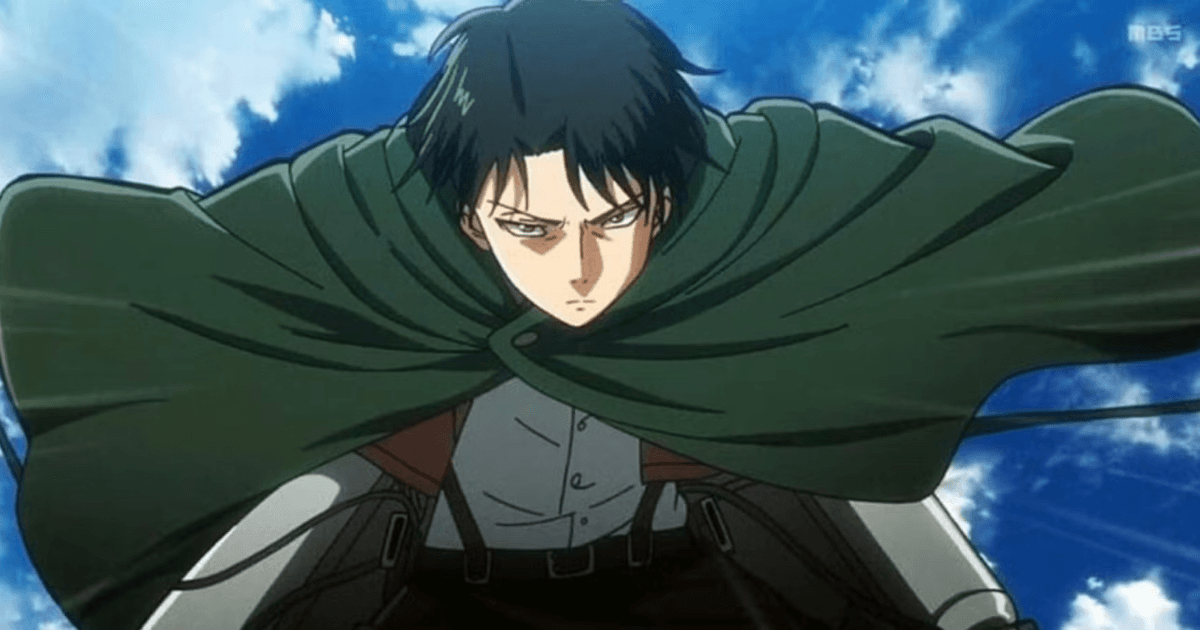
The first time the audience meets Levi Ackerman, in Season 1 Episode 4 of Attack on Titan, he's mopping a floor. The scene is two minutes of silent housekeeping in the Survey Corps base, immediately followed by Hange and Erwin arguing in the next room about how many cadets are about to die. Levi finishes the floor, looks at the dust on his hand, and joins the argument.
This is, in retrospect, exactly the right way to introduce him. Levi is a man for whom the unit-of-work is a single small task done correctly, and the unit-of-failure is the soldier he was supposed to keep alive. The show spends the next four seasons letting both halves of that equation grow.
The Special Operations Squad and the cost of competence
Levi's Special Operations Squad — Eld, Oluo, Petra, Gunther — is introduced in Season 1 as the elite unit assigned to protect Eren. The squad lasts six episodes. By the end of the female Titan arc, all four are dead, and Levi is sitting in a forest clearing trying to tell their families which body parts to bury.
The show stages the loss of the squad with deliberate slowness. The female Titan kills Gunther in a brief, almost incidental shot. Eld, mid-line. Oluo and Petra die one after another in the same fight. The score does not swell. Levi is not present for any of the deaths. He arrives afterwards, sees the bodies, and chooses to keep moving toward Eren.
The decision to "keep moving" is not framed as heroism. The show makes a point of returning to Petra's body in the final episodes of the arc. Her father, in town, tells Levi, sincerely, that he expected Petra to come home and marry. Levi listens, says nothing, and does not correct him about the death his daughter has just had. That is the first time the audience watches Levi do the specific thing he becomes the show's spokesperson for: the managed swallowing of a piece of grief that there is, for tactical reasons, no time to express.
The decision to make Erwin the centre
For most of Season 3 Part 2 — the Return to Shiganshina arc — the show shifts Levi's emotional centre to Erwin. The Beast Titan and his thrown-stone artillery have wiped out almost the entire Scout Regiment in a single attack. Erwin, mortally wounded, is unconscious. The only Titan injection left can save either Erwin or Armin.
The choice is structurally Levi's. He has the syringe. He has the standing in the unit. The episode — Season 3 Episode 19, Perfect Game — is twenty-two minutes of two arguments running in parallel: Eren and Mikasa pleading for Armin's life, Hange and Floch pleading for Erwin's. Levi does not argue. He stands holding the syringe.
What he does next is, for the show, the defining beat of his character. He chooses Armin. He does so by recognising — the show's word, in his line — that he is too tired to keep watching Erwin "stay in hell" for the squad's benefit. Erwin has been the show's argument for purposeful sacrifice. Levi, here, ends the argument. Erwin is allowed to die. Armin lives.
The choice plays as a kindness, not a tactical decision. It is Levi explicitly choosing to release the man he has spent four years carrying, in favour of giving Armin — a different boy — a chance Erwin no longer needs. The show treats it as a quietly seismic moment. It is among the most argued scenes in the series, and it is, in execution, almost without dialogue.
What Levi's command actually looks like
Most shōnen ensemble shows have a "captain" character whose command is performative — speeches, callouts, signature moves. Levi is unusual in that the show is interested in his command as administration. The recurring scenes of Levi giving orders are short, technical, and almost always deliver bad news quickly. The camera tends to hold on his face just long enough for the audience to register that he is choosing how to break the news, not what the news is.
The show repeatedly stages the same beat: Levi finishes a mission, walks past a body, salutes, says a single line — usually a clipped "they died as heroes," which the show treats not as a comfort but as a contractual phrase delivered to a family that needs it. The line comes back at every funeral, in every season, until it stops feeling like a line and starts feeling like a person Levi has had to become.
The fight with Zeke and the cost of staying alive
Levi's body, by the end of the series, is the ledger the show keeps. He is small, undersized, and chronically injured. The fight with Zeke and the subsequent Thunder Spear explosion in Season 4 leaves him without an eye and without most of two fingers. He spends the entire final third of the series in a wheelchair or being carried.
The show is unsparing about this. Levi is not given a recovery arc. He is not given a heroic sacrifice. He is allowed to live, and he is allowed to be visibly, irrecoverably broken. In the final battle, when his last contribution is to fire a single shot from a gun he can barely hold, the show frames it as the appropriate end to his arc — not because he saves the day, but because he stays in the fight in the only form that's left to him.
The closing sequence, in which Levi salutes Erwin's grave from his wheelchair, is the simplest version of the show's argument about him. Levi has lost everyone he was ever supposed to protect. He has, in exchange, kept the salute.
How the adaptation animates restraint
What Wit Studio understood about Levi, in Seasons 1 through 3, is that his action choreography is most effective when the camera does almost nothing. The famous Levi-Beast Titan sequence in Season 3 Part 2 is filmed almost entirely from above, in long, unbroken cuts, at a deliberate distance. The choice is structurally a piece of character writing: Levi is presented as a tactical fact, not a stylistic flourish. He hits the Beast Titan because he is the only person who can; the camera does not need to embellish it.
MAPPA, in the later episodes, retains most of this. The Levi-Zeke fight in Above and Below is one of the studio's most disciplined action sequences. The camera does not shake. The cuts are deliberate. Levi is, again, treated as the man who finishes a job — not the man who shows off while finishing it.
What Levi finally represents in the series' argument
By the end of Attack on Titan, Eren has become an atrocity, Erwin has died for an idea, Armin has inherited the nation's politics, and Mikasa has had to choose between love and slaughter. Levi, in this constellation, represents something the show otherwise refuses to: the possibility of doing your job, refusing to become a symbol, and still meaning something to the people you are responsible for.
The series' final image of him — surrounded by the children he managed to keep alive, including the Marleyan kids he had no obligation to save — is not redemption. He has not redeemed anything. He has simply continued to be the same person he was when the audience first saw him, mopping a floor, on the day he became responsible for the cadets in the next room. The show treats that as enough.
Last updated: April 2026.